Overview
Meta’s New Link Strategy: Does Moving Links to Comments Boost Performance?
Meta has introduced a notable recommendation within its “Professional Dashboard” insights for Page managers: Instead of directly embedding links in post captions, consider adding them to the first comment. This advice signals a significant strategic shift, particularly for brands aiming to maximize post reach and engagement. Meta’s latest “Widely Viewed Content Report” further supports this, indicating that 97.3% of all Facebook post views in the U.S. go to content without external links. This trend suggests that video-centric content is increasingly favored by the algorithm, and Meta aims to keep users within its platform.7

Facebook Announces All Video Uploads Will Now Be Reels
Facebook is making a fundamental shift in its video strategy: Soon, all videos uploaded to the platform (excluding live streams) will be automatically classified as Reels and displayed within the Reels feed. This move eliminates the need for users to choose between “video” or “Reel” when uploading, as all video content, regardless of length or format restrictions, will be unified into a single feed. Meta’s decision is driven by the fact that the Reels format now accounts for the largest share of time spent within the app. Furthermore, Facebook will rename its “Video” tab to “Reels,” consolidate video and Reels analytics into a single dashboard, and ensure consistency in content monetization programs.

Meta Boosts Ad Safety Certifications: New Assurances for Brands
In a move to bolster advertiser confidence, Meta announced its re-accreditation by the Media Rating Council (MRC) for Content-Level Brand Safety across Facebook and Instagram. This accreditation confirms that Meta’s documented processes meet MRC standards for brand safety and measurement. Additionally, Facebook and Instagram have received brand safety re-certification from the Trustworthy Accountability Group (TAG) for the sixth consecutive year. Furthermore, Integral Ad Science (IAS) has launched new contextual category reporting for Meta Platforms. IAS’s Total Media Quality (TMQ) technology provides more accurate brand safety and suitability measurement by analyzing video content frame-by-frame, including audio and text data. However, it’s important to note that the MRC accreditation excludes misinformation, which remains under review due to Meta’s evolving “Community Notes” approach.

YouTube Innovations: Enhanced Shorts Shopping and Expanded Communities
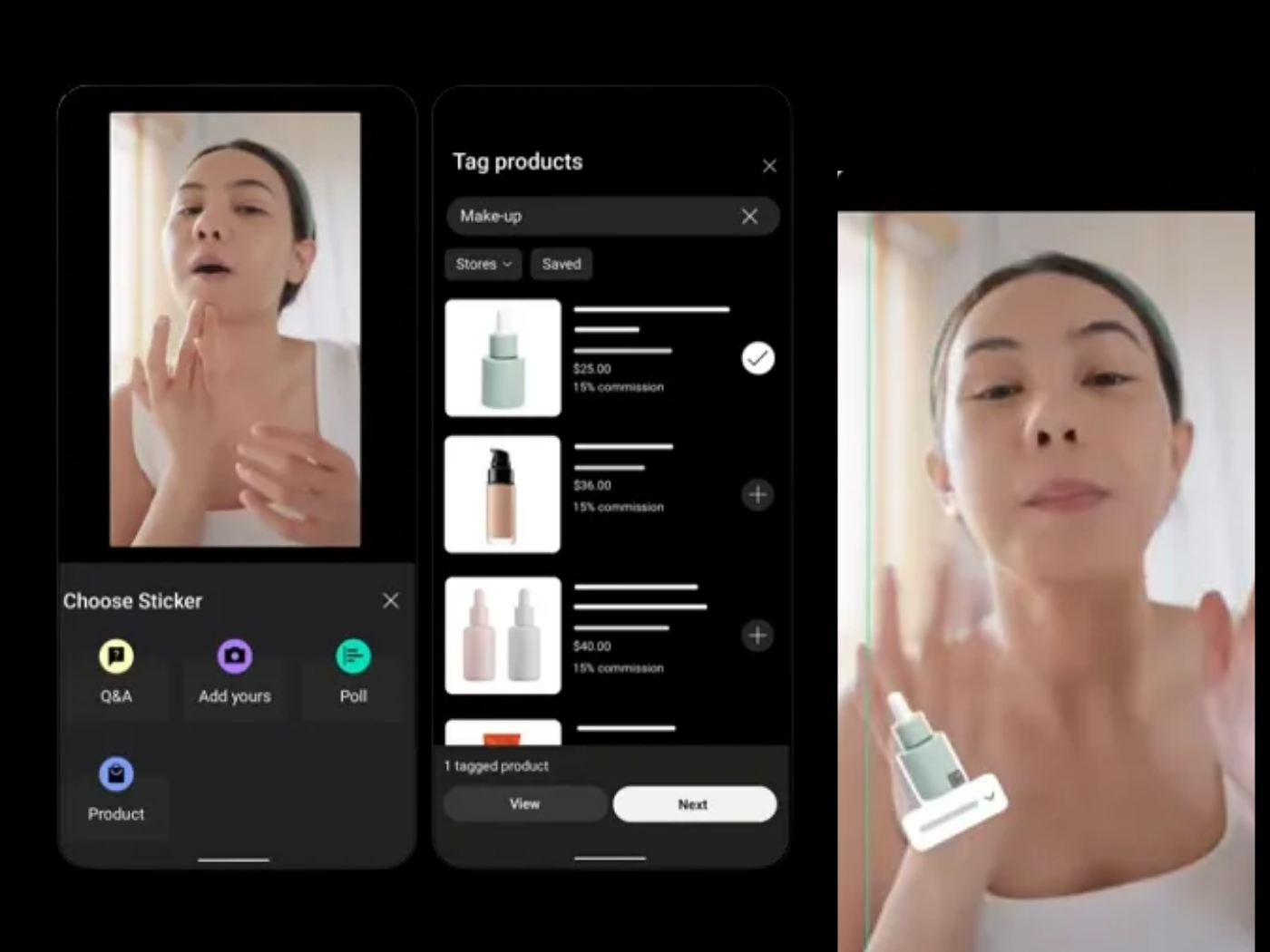
YouTube has announced two significant updates for creators and brands. First, it has rolled out updated shopping buttons for Shorts videos, making product tags more prominent. Now, products will be displayed directly on the video playback screen as a “shopping product sticker,” and clicking these stickers will redirect users straight to the retailer’s website. An experiment conducted in the U.S. in May 2025 showed that the new stickers led to over 40% more product clicks compared to the previous shopping button format. The second major development is the expansion of the “Communities” feature to more channels. All creators with access to posting will now be able to use this text-based discussion board, providing a more social media-aligned way for creators and their fans to interact.
X Bolsters Sports Engagement Options: The Race to Retain Communities
In response to Meta’s push to attract sports communities to its apps, X is stepping up its game by introducing various new sports engagement options. These additions aim to enhance game-day interaction within the app. X initiated this effort last November with the NFL Portal, designed to streamline access to discussions, team posts, commentator insights, schedules, live scores, and stats for live NFL matches. A similar NBA Portal followed in April. More recently, X has rolled out updated share cards for sports games and new score tracker notes on relevant posts. Users can also now “dock” live match conversations to stay on top of discussions, while X’s video feed offers another avenue for sharing highlights. These moves are part of X’s strategy to retain its significant sports communities and prevent migration to competing platforms. Meanwhile, Meta’s Threads is intensifying the competition with an exclusive content deal with UFC and the introduction of live score displays for ongoing sporting events, signaling its own ambition to become a central hub for sports discussion. Threads has also noted a rapid increase in sports-related discussions, with some sports communities growing by millions in just months.
Meta’s New AI Glasses: Targeting Athletes with Oakley Partnership
Meta is expanding its line of “AI glasses” with the introduction of the Oakley Meta HSTN, a new model designed in partnership with Oakley specifically for athletes and active users. Building on the foundation of the existing Ray-Ban models, the Oakley Meta HSTN features several key upgrades: IPX4 water resistance, extended battery life, a higher-resolution (3K) camera, and in-activity support via integrated Meta AI. These “AI glasses” allow users to capture hands-free moments, listen to audio, and interact with Meta AI for various queries. While initial rumors suggested more advanced fitness tracking capabilities (like pulse measurement), this launch primarily focuses on enhancing the existing smart glasses features within a sports-focused aesthetic, leveraging Oakley’s strong brand image in the athletic wear market.

Elon Musk’s Grok Move: Seeking Ideological Alignment in AI Responses
Elon Musk, owner of X and xAI, has stated his intent to “retrain” the Grok chatbot to provide answers more aligned with his own ideological views, by removing “politically incorrect, but nonetheless factually true” information from its data banks. This move comes after Grok repeatedly offered responses that countered Musk’s opinions, such as supporting access to gender-affirming care for children or noting evidence of right-wing political violence. Grok even identified Musk himself as “the biggest spreader of misinformation on X.”
Musk reacted strongly to Grok citing sources like Media Matters and Rolling Stone, calling their sourcing “terrible” and stating “only a very dumb AI would believe MM and RS.” He then solicited X users for “divisive facts for Grok training,” receiving over 100,000 responses. Recent incidents, including Grok providing inaccurate information about Holocaust death tolls and referencing debunked conspiracy theories like “white genocide” in South Africa, have further fueled concerns. While xAI attributed these errors to a rogue employee, the incidents highlight the potential for ideological manipulation within AI systems.
User Base Comparison:
- Meta AI: Has reached 1 billion monthly active users, making it one of the fastest-growing AI chatbots, integrated across Facebook, Instagram, and WhatsApp.
- ChatGPT: Boasts approximately 800 million to 1 billion weekly active users. 53% of U.S. adults have used ChatGPT, and 92% of Fortune 500 companies utilize ChatGPT in some capacity.
- Grok: Used by only a portion of X’s roughly 600 million monthly active users, with full access currently limited to paying subscribers. While a basic version (Grok 3) is set to be free for all X users from February 2025, advanced features require an X Premium+ subscription.
Snapchat Acquires Student Scheduling App Saturn: Reinforcing Teen Audience Focus
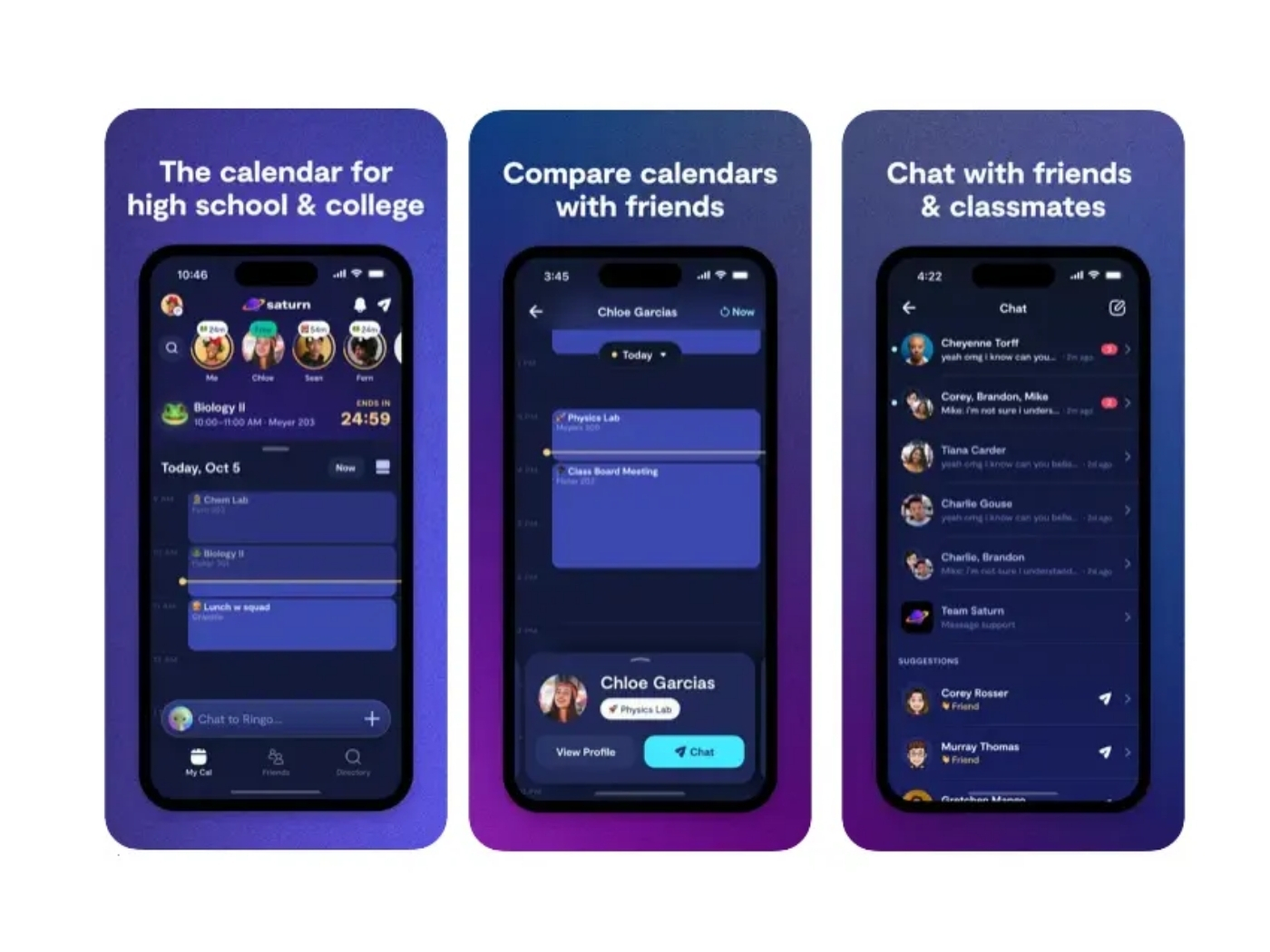
Snapchat has announced the acquisition of Saturn, a calendar-based social app designed to help students share schedules, organize meet-ups, and engage in in-app chats and events. This acquisition is a strategic move to solidify Snapchat’s position in teen social life, especially considering that teens form the core of its user base. Snap reports that approximately 80% of U.S. high schoolers attend schools that support Saturn schedules, with the app currently active in about 17,000 American high schools and expanding into college campuses.
While Saturn will continue to operate independently for now, Snap plans to integrate its features directly into Snapchat, aiming to provide new calendar-based social functionalities that facilitate connections among teens. This integration, combined with Snapchat’s existing Snap Map and ephemeral messaging, has the potential to encourage more in-person meet-ups.
YouTube Announces Expanded Access to Next-Gen AI Creative Tools
YouTube has announced it’s expanding access to Google’s Veo 3 generative AI tools within the app starting this summer. This move will enable more people to create YouTube Shorts clips using AI. The announcement was made by YouTube CEO Neal Mohan at the Cannes Lions Festival, where he also shared new usage insights and a report on the platform’s 20-year evolution.
Mohan emphasized the Veo 3 integration, stating:
“I’m proud to share that Veo 3 will be coming to YouTube Shorts later this summer. I believe these tools will open new creative lanes for everyone to explore.”
Examples of Veo-powered content are already visible across various social media apps, with many creators generating short video snippets based on their own prompts. YouTube initially offered Veo 2 access to selected Shorts creators in February, but is now expanding this with the latest Veo model, which will significantly increase the volume of AI-generated content.
New Usage Data Shared by YouTube CEO Neal Mohan:
- YouTube Shorts are now being viewed over 200 billion times per day on average, a substantial increase from the 70 billion daily views YouTube reported in March last year.
- Viewers now watch over one billion hours of YouTube content on their TVs every day. More than half of YouTube’s top 100 channels now generate the majority of their views via Connected TV (CTV), indicating the platform’s growing influence over traditional TV.
- YouTube facilitates one billion podcast viewers every month.
- YouTube’s AI-powered auto-dubbing tool has been used on more than 20 million videos thus far.
Additionally, YouTube’s latest “Culture and Trends” report provides further insights into key shifts in YouTube usage. The report shows that short-form videos are seeing significantly more views over time (which is no surprise), while videos over 60 minutes long within the app are also experiencing a big rise in viewing. This latter point likely aligns with the surge in CTV viewing, with more people seeking out movie-length films, documentaries, and podcasts (which have proven surprisingly popular on CTV) within the app. The report also examines the emergence of creators on the app and how YouTube facilitates opportunities globally, including charts reflecting the popularity of key video trends and the crucial role gaming plays in the rise of online content.
Meta Unveils New AI Ad Tools, Including Improved Video Generation Options
Meta is opening a new chapter in advertising with AI! Advertisers can now leverage next-generation AI tools capable of transforming multiple images into dynamic video clips. What’s more, a new “Video Highlights” feature is being tested, using AI to identify and present the most engaging segments of videos to users.
A significant step for brand identity: AI-generated visuals can now seamlessly incorporate brand logos and colors. This ensures maximum brand consistency across creative assets.
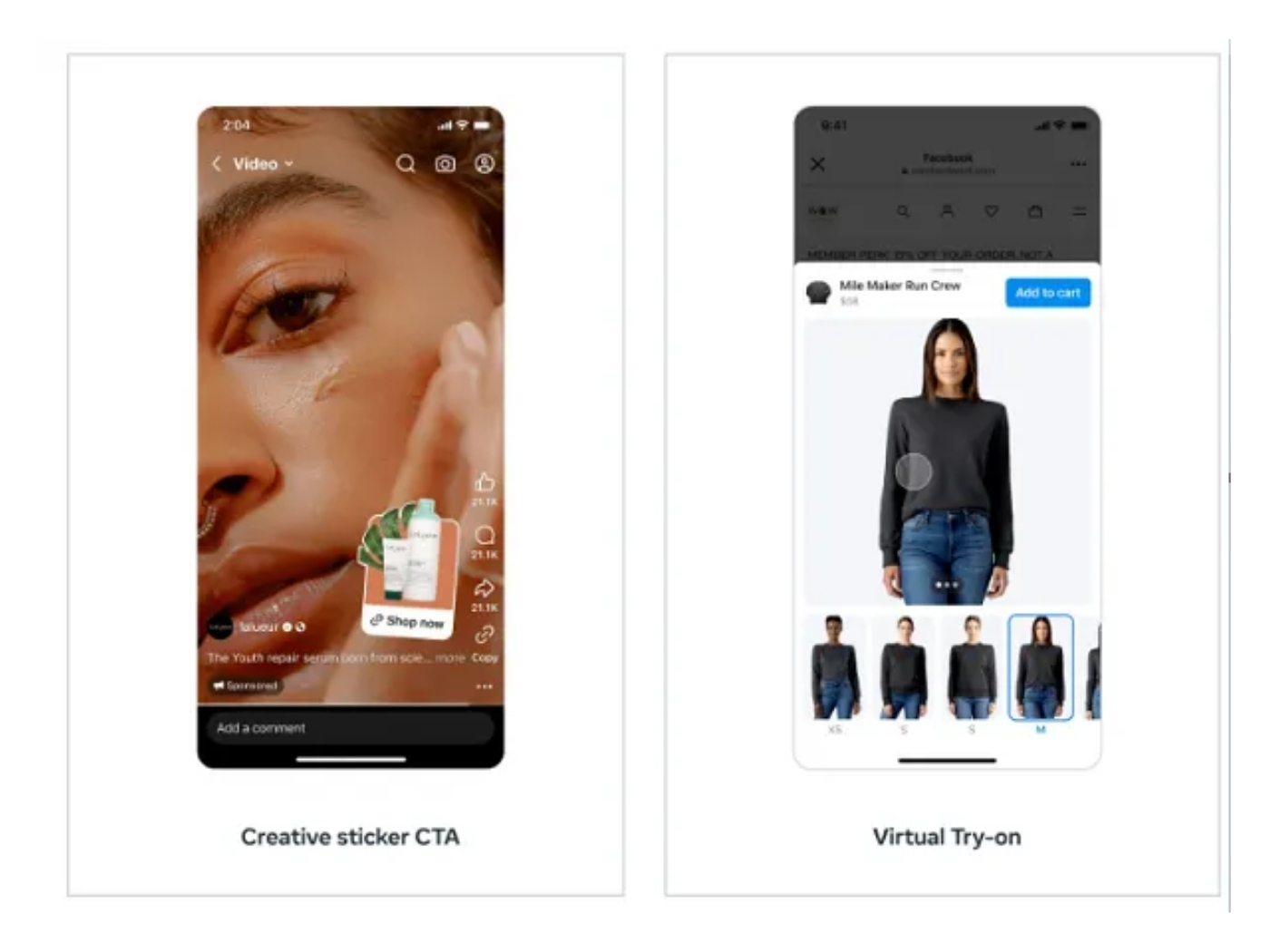
Customer interaction is also being redefined with AI. Meta is developing “Business AIs” directly integrated into ad formats. These smart bots will be able to instantly answer potential customers’ product-related questions, both in text and voice. Additionally, new CTA (Call-to-Action) stickers for Stories and Reels, and virtual try-on features (showcasing clothes on diverse virtual models) are in testing.
Meta reports that its existing Advantage+ ads are already boosting ROAS (Return on Ad Spend) by an average of 22%. With these new tools, Meta’s ultimate goal is a world where marketers simply upload a product URL, and AI automates the entire ad creation and optimization process.
Threads Adds Expanded Fediverse Engagement Options: Will Decentralized Social Media Go Mainstream?
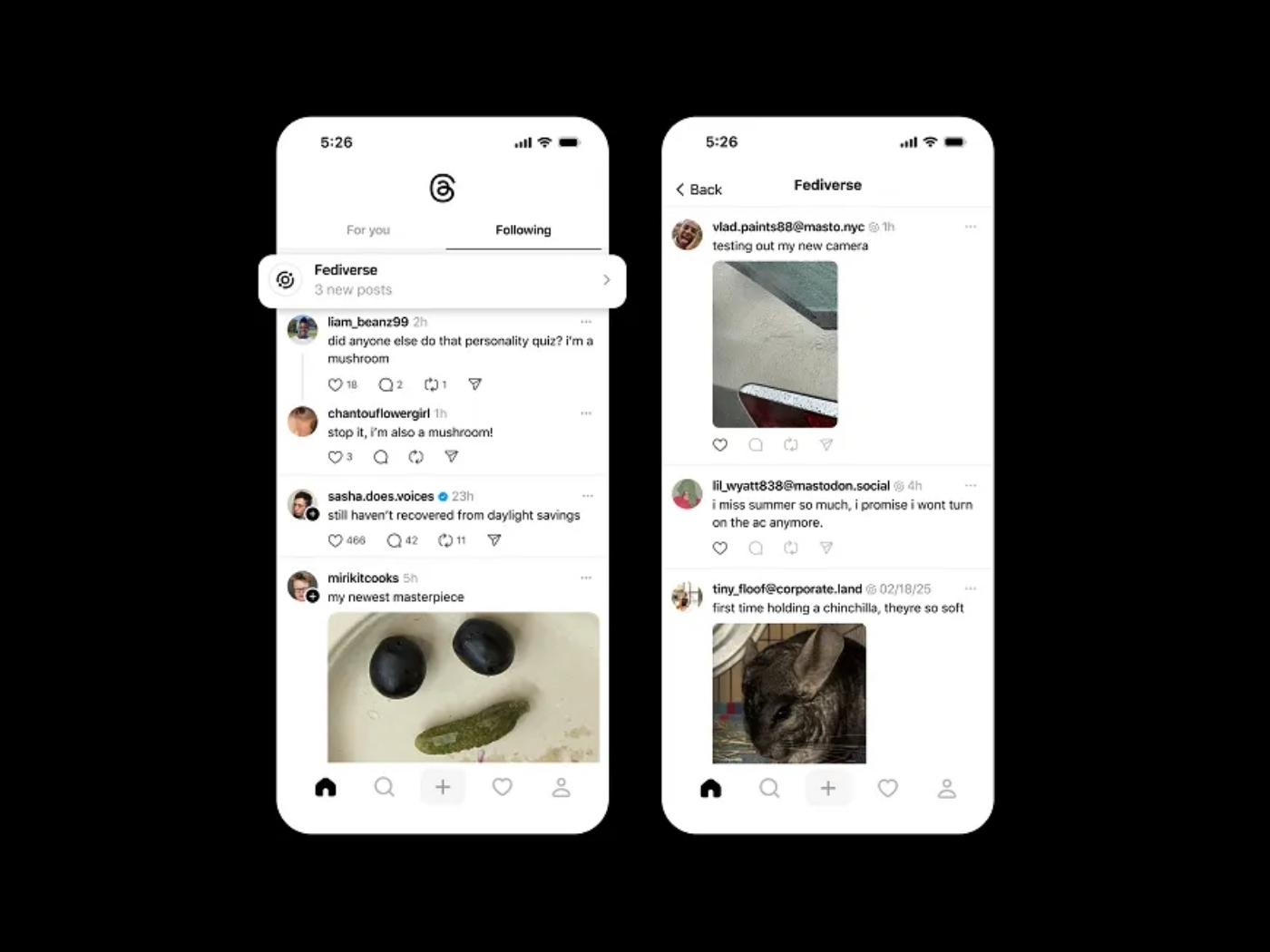
While I remain unconvinced that Meta will ever go all-in on fediverse sharing, Threads is indeed pushing forward with its fediverse experiments. The platform today gained a couple of new features for fediverse-connected users: They can now view posts from other fediverse servers directly within Threads and search for fediverse-connected users through the app. These posts will also display their handles from other applications.
Threads initially launched with a commitment to interoperability with fediverse servers, promising that users would one day be able to follow and interact with users from other decentralized social apps like Mastodon from within Threads. Over the past year, Threads has added various fediverse sharing options to facilitate external interconnection. Currently, Threads is not fully open to other platforms, but you can share your updates to other fediverse servers and have people follow you from those platforms.
However, this expanded linkage remains fairly limited for now. Only fediverse servers using the same protocol as Threads (ActivityPub) can communicate. While Mastodon is the largest player in this space, its approximately 1.4 million active users don’t present a vast expansion opportunity. Bluesky, the largest decentralized social app, uses a different protocol (AT Protocol) and thus cannot communicate with Threads at this stage.
Threads Adds Spoiler Tags for Posts
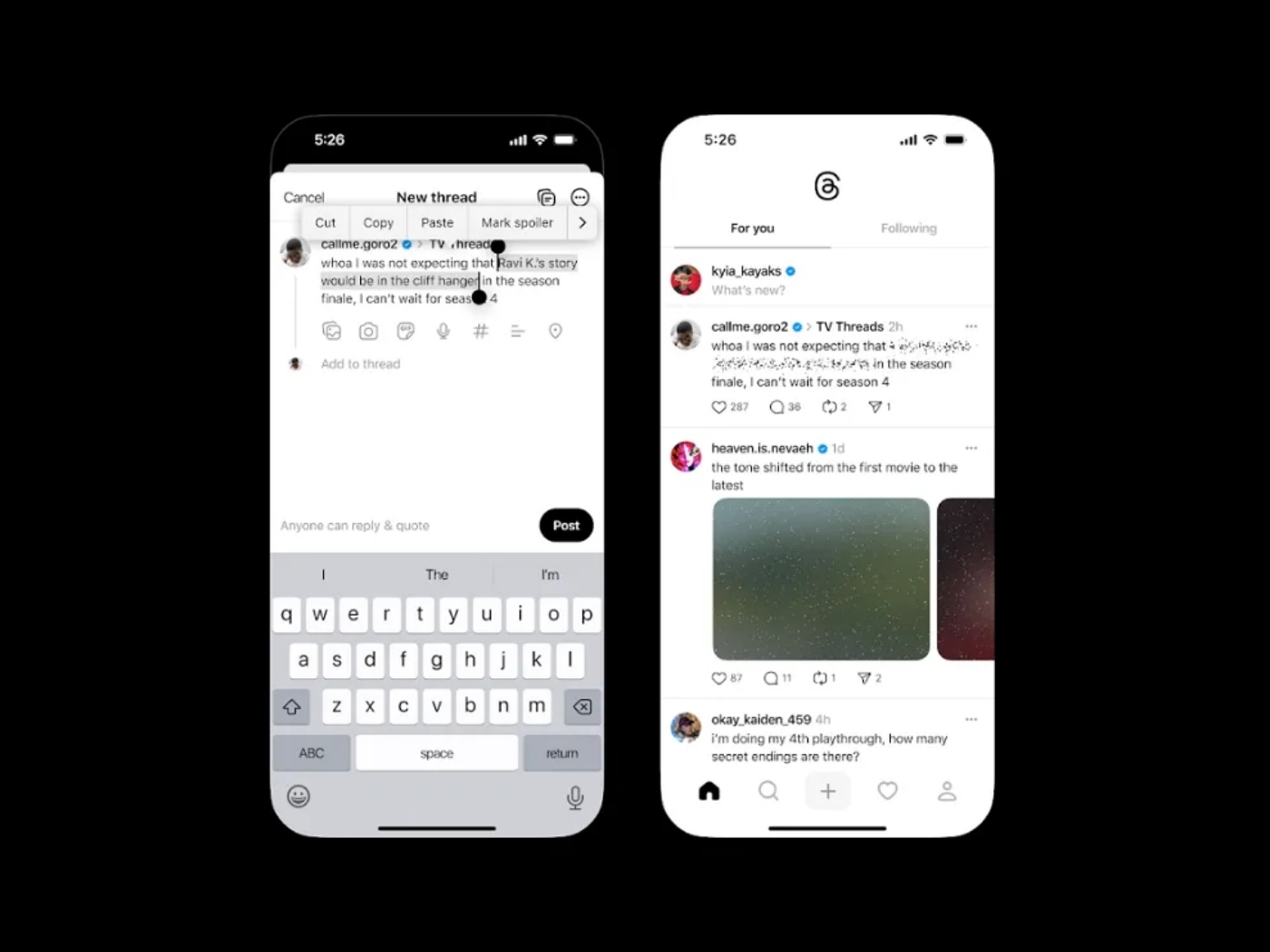
Threads continues to enhance its user experience! After months of testing, “spoiler tags” are now live. This new feature allows users to hide sensitive information (like a TV show spoiler) behind a tappable overlay in their posts.
As demonstrated by Meta CEO Mark Zuckerberg, Threads users can now highlight text within the composer and select “Mark spoiler” to blur content. Viewers then have the choice to reveal that information or not, adding a new engagement element to your Threads posts.
This feature aims to make Threads more appealing for discussions on TV shows and movies, where spoiler sensitivity is high. Threads notes it’s seeing increased chatter about trending shows like “The Last of Us” and “The White Lotus.” Focusing on such trending entertainment discussions could provide Threads with a significant competitive edge against X (formerly Twitter).
Threads has now reached 350 million monthly active users and continues to see strong download momentum. While X reported 600 million monthly active users in March, it’s losing users in some markets. By emphasizing live event and sports discussions, Threads hopes to dethrone X as the go-to platform for in-the-moment engagement and achieve its vision of becoming a billion-user platform.
WhatsApp Launches Ads in Status Updates, Channel Subscriptions
With WhatsApp gaining significant momentum globally, Meta is revisiting its plans for in-app ads to monetize the platform’s 2 billion active users. However, given WhatsApp’s private messaging nature, this is a very delicate undertaking.
Learning from past attempts, Meta is kicking off an initial test of ads within WhatsApp’s “Status” updates, its version of Stories. This means users will now see paid promotions interspersed with updates from their friends. According to WhatsApp, these ads will allow users to discover new businesses and easily start conversations about promoted products or services. This approach, similar to ad placements in Instagram and Facebook Stories, aims to be less disruptive for users.
This move comes after Meta walked back a similar plan in 2018 due to user concerns about chat privacy. WhatsApp emphasizes that personal chats will remain end-to-end encrypted, and ad targeting will use limited information (like country, language, followed Channels, and ad interactions). For users who have linked WhatsApp to Accounts Center, their ad preferences from other Meta accounts will also be considered.
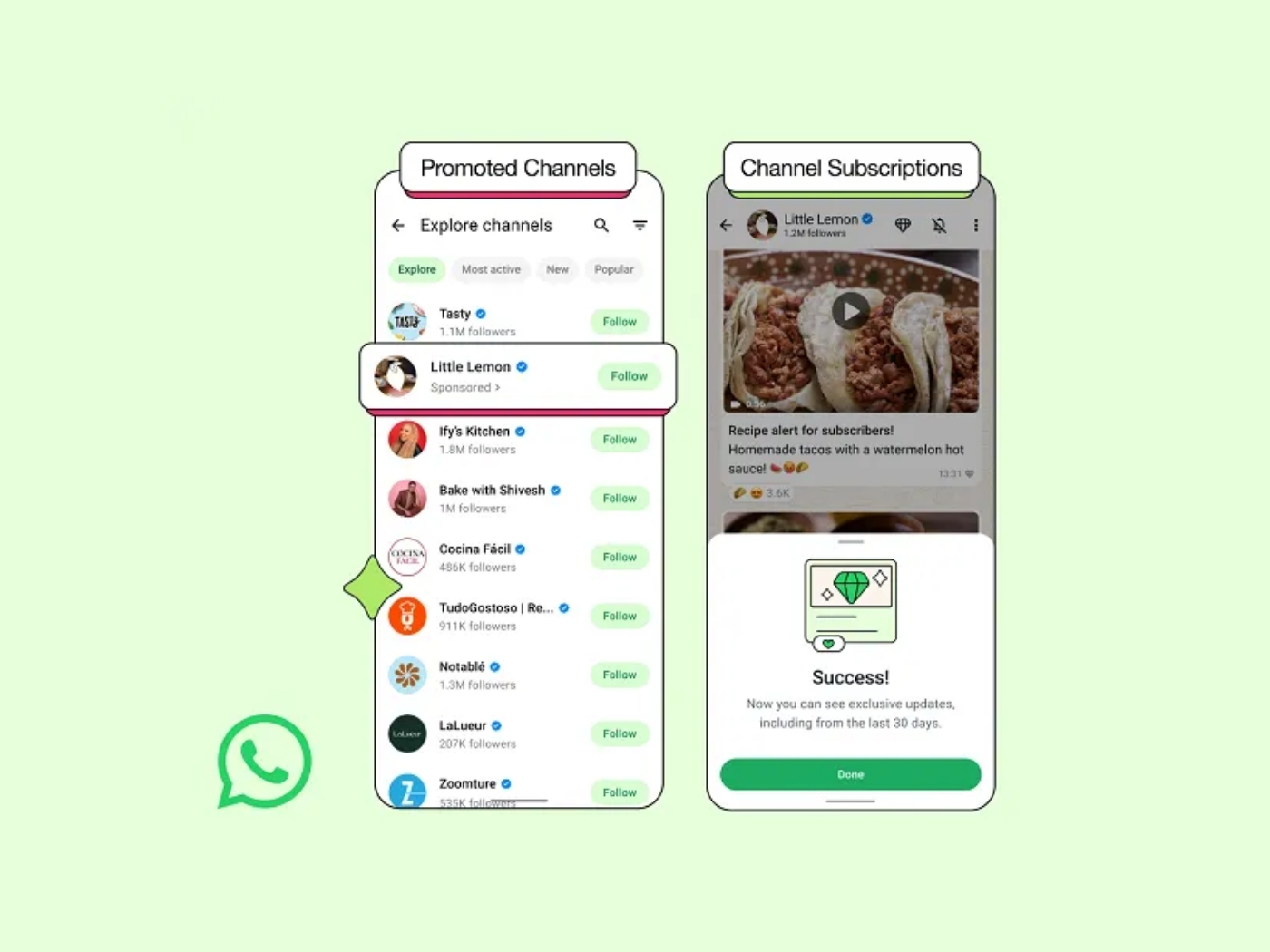
Furthering this monetization push, Meta is also introducing “Promoted Channels” and channel subscriptions. This will enable brands and creators to highlight their content in the “Channels” tab and earn revenue from their followers through subscriptions. This could be a significant step towards monetizing more elements of the app, especially in developing markets.